The SSH protocol recommended a method for remote login and remote file transfer which provides confidentiality and security for data exchanged between two server systems. The SSH depends upon the use of public key cryptography. The OpenSSH server offers this kind of setup under Linux or Unix-like system. This how-to covers generating and using ssh public keys for automated usage such as:
Advertisements
Quick steps: Create and use an SSH public-private key pair for Linux VMs in Azure.; 4 minutes to read +4; In this article. With a secure shell (SSH) key pair, you can create virtual machines (VMs) in Azure that use SSH keys for authentication, eliminating the need for passwords to sign in. Oct 20, 2014 If you were able to login to your account using SSH without a password, you have successfully configured SSH key-based authentication to your account. However, your password-based authentication mechanism is still active, meaning that your server is still exposed to brute-force attacks. SSH (Secure Shell) is a cryptographic network protocol which is used for establishing secure connections between a remote client and a server, using the TCP protocol for security and reliability. SSH based connections support various authentication methods, some of them being: Password based authentication; Key based authentication. Apr 09, 2015. Today I have setup 3 servers (4 including the server sending the SSH commands) with a public SSH key so I can automate some scripts. It works on the 2 first systems but not on the third. SSH still prompt for the password when sending a SSH command. Generate SSH public/private key on local server.
- Automated Login using the shell scripts
- Making backups
- Run commands from the shell prompt and more
- Login without password
Normally when you SSH into a computer, you need to provide a username and it will prompt you for your password, like this: By generating a public-private key pair on the local machine and sharing the public key with a remote machine, you can SSH to the remote machine without providing a login or being. Ssh-keygen -t rsa. The key generator will ask for location and file name to which the key is saved to. Enter a new name or use the default by pressing enter. (Optional) Create a passphrase for the key when prompted. This is a simple password that will protect your private key should someone be able to get their hands on it.
Bash Ssh Generate Key Login Without Password In Facebook
How to configure SSH Public key-based authentication for a Linux/Unix
The steps and commands are as follows:
- On your local system type: ssh-keygen
- Install public key into remote server: ssh-copy-id user@remote-server-ip-name
- Use ssh for password less login: ssh user@remote-server-ip-name
Let us see all commands in details.
Generating SSH Keys
First, log on to your workstation. For example, log on to workstation called admin.fbsd.nixcraft.org as vivek user. Please refer the following sample setup. You will be logged in, on your local system, AS THE USER you wish to make passwordless ssh connections.
To create the cryptographic keys on your local system powered by FreeBSD/Linux/macOS/ UNIX workstation, enter:ssh-keygen -t rsa
Assign the pass phrase (press [enter] key twice if you don’t want a passphrase). It will create 2 files in ~/.ssh directory as follows:
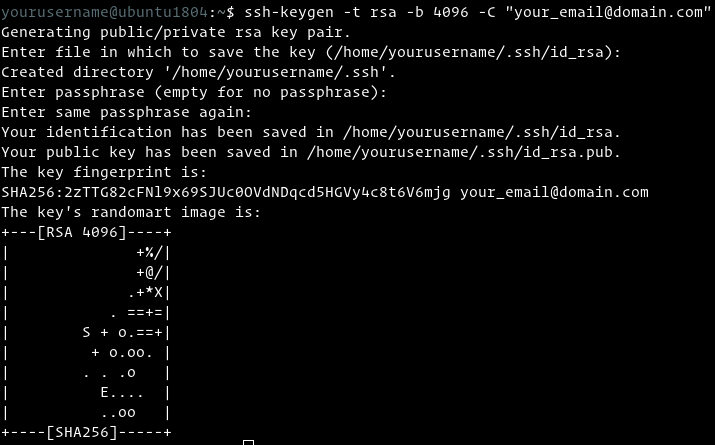
- ~/.ssh/id_rsa : identification (private) key
- ~/.ssh/id_rsa.pub : public key
How to copy a public ley (~/.ssh/id_rsa.pub) to your server
Use the scp command to copy the id_rsa.pub (public key) from your local system to rh9linux.nixcraft.org remote server as authorized_keys file, this is know as, “installing the public key to server”:scp ~/.ssh/id_rsa.pub vivek@rh9linux.nixcraft.org:~/.ssh/authorized_keys
Another option is to use the ssh-copy-id command as follows from your local workstation:ssh-copy-id user@remote-box
ssh-copy-id -i ~/.ssh/id_rsa.pub vivek@rh9linux.nixcraft.org
How to login to your remote server using SSH keys
From your local system (e.g. FreeBSD/macOS/Linux/Unix workstation) type the following command:ssh user@remote-box
ssh vivek@rh9linux.nixcraft.org
Changing the pass-phrase on workstation
To change a passphrase for your ssh keys, use the ssh-keygen command as follows:ssh-keygen -p
ORcd ~/.ssh/
ssh-keygen -f id_rsa -p
If a product key works, That’s great, But if it doesn’t just skip it and copy another Windows 7 Home premium Serial key from the list below and test that one. 
How to use ssh-agen command
You can use the ssh-agent command to avoid continues passphrase typing at the CLI:ssh-agent $SHELL
ssh-add
Now ssh server will not use prompt for the password. Above two commands can be added to your ~/.bash_profile file so that as soon as you login into workstation you can set the agent. Generate public private key using openssl.
Deleting the keys hold by ssh-agent
To list keys, enter:ssh-add -l
To delete all keys, enter:ssh-add -D
To remove specific key, enter:ssh-add -d key
See also:
- Man pages: sshd(8),ssh(1),ssh-add(1),ssh-agent(1)
Setup Ssh Without Password
ADVERTISEMENTS