-->

- Openssl Ec Generate Public Key From Private Key
- Openssl Command To Generate Public Key From Private Key
- Openssl Generate Public Private Key
- Generate Public Key From Private Key Openssl
- Openssl Create Rsa Private Public Key
- Openssl Generate Rsa
- Openssl Create Key Pair
OpenSSL has a variety of commands that can be used to operate on private key files, some of which are specific to RSA (e.g. Openssl rsa and openssl genrsa) or which have other limitations. Here we always use openssl pkey, openssl genpkey, and openssl pkcs8, regardless of the type of key. Mar 03, 2020 The device uses a private key to sign a JSON Web Token (JWT). The token is passed to Cloud IoT Core as proof of the device's identity. The service uses the device public key (uploaded before the.
To sign an assembly with a strong name, you must have a public/private key pair. This public and private cryptographic key pair is used during compilation to create a strong-named assembly. You can create a key pair using the Strong Name tool (Sn.exe). Key pair files usually have an .snk extension.
Note
In Visual Studio, the C# and Visual Basic project property pages include a Signing tab that enables you to select existing key files or to generate new key files without using Sn.exe. In Visual C++, you can specify the location of an existing key file in the Advanced property page in the Linker section of the Configuration Properties section of the Property Pages window. The use of the AssemblyKeyFileAttribute attribute to identify key file pairs was made obsolete beginning with Visual Studio 2005.
Create a key pair
To create a key pair, at a command prompt, type the following command:
sn –k <file name>
In this command, file name is the name of the output file containing the key pair.
The following example creates a key pair called sgKey.snk.
If you intend to delay sign an assembly and you control the whole key pair (which is unlikely outside test scenarios), you can use the following commands to generate a key pair and then extract the public key from it into a separate file. First, create the key pair:
Next, extract the public key from the key pair and copy it to a separate file:
Once you create the key pair, you must put the file where the strong name signing tools can find it.
When signing an assembly with a strong name, the Assembly Linker (Al.exe) looks for the key file relative to the current directory and to the output directory. When using command-line compilers, you can simply copy the key to the current directory containing your code modules.
If you are using an earlier version of Visual Studio that does not have a Signing tab in the project properties, the recommended key file location is the project directory with the file attribute specified as follows:
See also
While Encrypting a File with a Password from the Command Line using OpenSSLis very useful in its own right, the real power of the OpenSSL library is itsability to support the use of public key cryptograph for encrypting orvalidating data in an unattended manner (where the password is not required toencrypt) is done with public keys.
The Commands to Run
Generate a 2048 bit RSA Key
You can generate a public and private RSA key pair like this:
openssl genrsa -des3 -out private.pem 2048
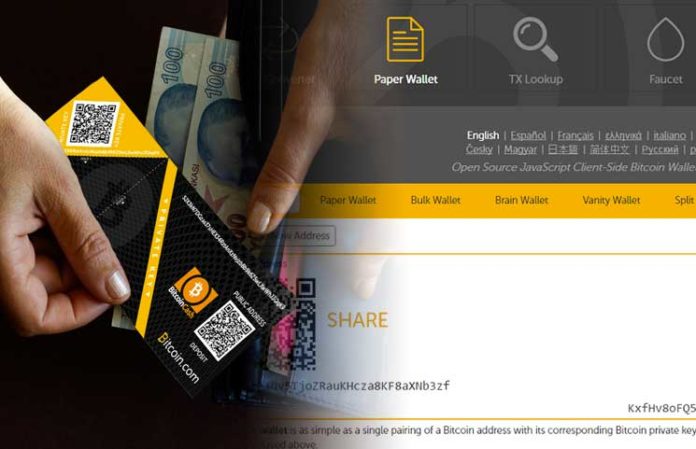 Notice that we use secrets. Unfortunately, we can’t just create our own random object and use it only for the key generation. Def initpool(self):for i in range(self.POOLSIZE):randombyte = secrets.randbits(8)self.seedbyte(randombyte)timeint = int(time.time)self.seedint(timeint)def seedint(self, n):self.seedbyte(n)self.seedbyte(n 8)self.seedbyte(n 16)self.seedbyte(n 24)def seedbyte(self, n):self.poolself.poolpointer ^= n & 255self.poolpointer += 1if self.poolpointer = self.POOLSIZE:self.poolpointer = 0 Seeding with inputHere we first put a timestamp and then the input string, character by character. Instead, there is a shared object that is used by any code that is running in one script.What does that mean for us? Def seedinput(self, strinput):timeint = int(time.time)self.seedint(timeint)for char in strinput:charcode = ord(char)self.seedbyte(charcode) Generating the private keyThis part might look hard, but it’s actually very simple.First, we need to generate 32-byte number using our pool.
Openssl Ec Generate Public Key From Private Key
That generates a 2048-bit RSA key pair, encrypts them with a password you provideand writes them to a file. You need to next extract the public key file. You willuse this, for instance, on your web server to encrypt content so that it canonly be read with the private key.
Export the RSA Public Key to a File
This is a command that is
openssl rsa -in private.pem -outform PEM -pubout -out public.pem
The -pubout flag is really important. Be sure to include it.
Next open the public.pem and ensure that it starts with-----BEGIN PUBLIC KEY-----. This is how you know that this file is thepublic key of the pair and not a private key.
To check the file from the command line you can use the less command, like this:
Openssl Command To Generate Public Key From Private Key
less public.pem
Do Not Run This, it Exports the Private Key
A previous version of the post gave this example in error.
openssl rsa -in private.pem -out private_unencrypted.pem -outform PEM
The error is that the -pubout was dropped from the end of the command.That changes the meaning of the command from that of exporting the public keyto exporting the private key outside of its encrypted wrapper. Inspecting theoutput file, in this case private_unencrypted.pem clearly shows that the keyis a RSA private key as it starts with -----BEGIN RSA PRIVATE KEY-----.
Visually Inspect Your Key Files
It is important to visually inspect you private and public key files to makesure that they are what you expect. OpenSSL will clearly explain the nature ofthe key block with a -----BEGIN RSA PRIVATE KEY----- or -----BEGIN PUBLIC KEY-----.
You can use less to inspect each of your two files in turn:
less private.pemto verify that it starts with a-----BEGIN RSA PRIVATE KEY-----less public.pemto verify that it starts with a-----BEGIN PUBLIC KEY-----
Openssl Generate Public Private Key
The next section shows a full example of what each key file should look like.
The Generated Key Files
The generated files are base64-encoded encryption keys in plain text format.If you select a password for your private key, its file will be encrypted withyour password. Be sure to remember this password or the key pair becomes useless.
The private.pem file looks something like this:
The public key, public.pem, file looks like:
Generate Public Key From Private Key Openssl
Protecting Your Keys
Depending on the nature of the information you will protect, it’s important tokeep the private key backed up and secret. The public key can be distributedanywhere or embedded in your web application scripts, such as in your PHP,Ruby, or other scripts. Again, backup your keys!
Openssl Create Rsa Private Public Key
Remember, if the key goes away the data encrypted to it is gone. Keeping aprinted copy of the key material in a sealed envelope in a bank safety depositbox is a good way to protect important keys against loss due to fire or harddrive failure.
 Aug 20, 2015 Quick Heal Total Security 2015 Serial key will scan your data automatically when it detect threat or malware in your computer. You can change its virus protection settings. You can also scan your data manually after hour, day, or week. It scan your external storage devices automatically when you insert in the system. Sep 24, 2015 Quick Heal Total Security 2014 Product Key And Crack Full Version Free Download has also been incorporated with the capability of detecting and diagnosing product key the 2014 backdoor extortions. This Quick Heal Total Security has been consisting of several product key features and also outstanding product key tools that have the ability to. Quick Heal Total Security 2015 Crack is one of the best applications which totally clean all the files and folders. It is simple and easy to use application which main purpose is to fight against all the viruses, adwares, spywares, boot-kits, root-kits, keylogger, torjans, malwares and other malicious threats.
Oh, and one last thing.
If you, dear reader, were planning any funny business with the private key that I have just published here. Know that they were made especially for this series of blog posts. I do not use them for anything else.
Openssl Generate Rsa
Found an issue?
Rietta plans, develops, and maintains applications.
Openssl Create Key Pair
Learn more about our services or drop us your email and we'll e-mail you back.