You generate an SSH key through Mac OS X by using the Terminal application. Once you upload a valid public SSH key,Gerrit can authenticate you based on this key.
- Mac Ssh Public Key
- Ssh Key Setup
- Mac Where Generated Ssh Key Is Located On Computer
- Mac Where Generated Ssh Key Is Located On Windows 10
An SSH key consists of a pair of files. One is the private key, which you should never give to anyone. No one will everask you for it and if so, simply ignore them - they are trying to steal it.The other is the public key. When you generate your keys, you will use ssh-keygen to store the keys in a safe locationso you can authenticate with Gerrit.
An SSH key consists of a pair of files. One is the private key, which you should never give to anyone. No one will ever ask you for it and if so, simply ignore them - they are trying to steal it. The other is the public key. When you generate your keys, you will use ssh-keygen to store the keys in a safe location so you can authenticate with. Before adding a new SSH key to the ssh-agent to manage your keys, you should have checked for existing SSH keys and generated a new SSH key. When adding your SSH key to the agent, use the default macOS ssh-add command, and not an application installed by macports.
Run it on your local computer to generate a 2048-bit RSA key pair, which is fine for most uses. Ssh-keygen The utility prompts you to select a location for the keys. By default, the keys are stored in the /.ssh directory with the filenames idrsa for the private key and idrsa.pub for the public key. Jun 15, 2015 So I'm wondering if there is something in the keys generated on the Raspberry Pi, or something in the connection messages from the ssh client on the Raspberry Pi that is telling the Mac where it should be looking. If you have another system that you can ssh from into your Mac to see if the ssh-keygen information behaves the same or differently. Sep 26, 2019 To generate SSH keys in macOS, follow these steps: Enter the following command in the Terminal window. Press the ENTER key to accept the default location. Type in a passphrase. You can also hit the ENTER key to accept the default (no passphrase).
To generate SSH keys in Mac OS X, follow these steps:
Enter the following command in the Terminal window:
This starts the key generation process. When you execute this command, the ssh-keygen utility prompts you to indicate where to store the key.
Press the
ENTERkey to accept the default location. The ssh-keygen utility prompts you for a passphrase.Type in a passphrase. You can also hit the
ENTERkey to accept the default (no passphrase). However, this is not recommended.
Warning
You will need to enter the passphrase a second time to continue.
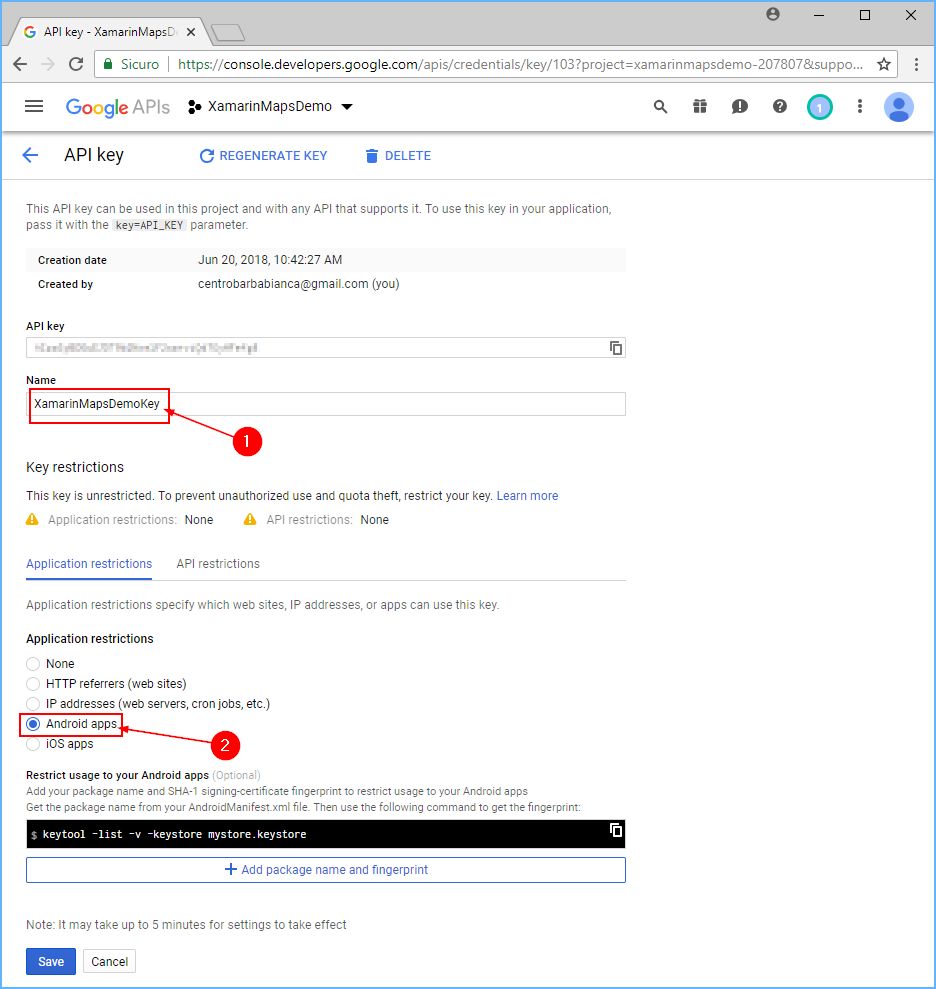 When you are working with JAVA applications and JAVA based server, you may need to configure a Java key store (JKS) file. Self signed keystore can be easily created with keytool command. But if you have a private key and a CA signed certificate of it, You can not create a key store with just one keytool command. Keytool -import -noprompt -alias clientpublic -keystore client.public -file temp.key -storepass public We'll also extract and store the server's public key. Here's the command to extract the key: keytool -export -alias serverprivate -keystore server.private -file temp.key -storepass serverpw And here's the command to place it in its own keystore. Jan 17, 2019 Exporting the public key from a JSK is quite straightforward with the keytool utility, but exporting the private key is not allowed. Therefore, we need to get the support of the openssl utility for that. Additionally, you can write some custom Java code to get the private key extracted as well.
After you confirm the passphrase, the system generates the key pair and you will see output like this:
Your private key is saved to the id_rsa file in the .ssh subdirectory of your home directory and is used to verifythe public key you use belongs to your Gerrit account.
Warning
Never share your private key with anyone! Ever! We mean it!
Your public key is saved to a file called id_rsa.pub in the .ssh subdirectory of your home directory. You can copyit to your clipboard using the following command:
Now you can head over to Gerrit, go to settings and paste your public key as described here.
Gerrit is using the special port 29418 instead of the default SSH port 22 which has to be configured accordingly. This can be done in your local ~/.ssh/config file which would contain the following sections then:
Testing your connection:
Oct 01, 2019 TweakBit PCRepairKit is a pc repair software as its names shows. It maintains your PC’s performance by repairing them and by resolving the problems in real-time. TweakBit PCRepairKit 2019 License Key works 24/7 and makes your computer hundred percent optimized and well-tuned for your assignments. Apr 11, 2020 The Tweakbit PCRepairKit Activation Key is a perfect defense tool against extraordinary stability. By the way, many devices that can meet user requirements and stop errors also provide speed and speed, therefore Tweakbit PCRepairKit serial number is an amazing tool for your computer and also fix all kinds of errors and enhancement the quality and speed of. Mar 05, 2020 TweakBit PCRepairKit 2.0.0.54050 Crack + License Key 2020 Free Download TweakBit PCRepairKit Crack is one of the safest and most effective programs of its kind in the market. Auslogics TweakBit is a Windows performance optimization software that can help you maintain and repair workstations regularly.When I saw how many different things he scanned. Tweakbit pc repair kit key generator. Apr 10, 2020 TweakBit PCRepairKit Crack: is a small application that allows you to clean invalid keys, repair broken shortcuts and defrag the registry to make it more compact and organized.The registry is healthier, uses less memory, and enables applications to access keys in less time, which helps restore trouble-free performance. Apr 10, 2020 TweakBit PCRepairKit with license key 2019 free is the application that is designed to clean out the invalid keys, repairing broken shortcuts, and defragmenting the registry to make it more compact and organized. Sometimes your PC becomes slower or applications starting to crash.
This guide goes through setting up SSH keys on macOS Mojave 10.14 back to Mac OSX 10.11 and also a secure password-less SSH connection between a local macOS workstation and a remote server also running a Linux variant operating system.
The process requires generating a public and private key on the local computer and then adding the public key to the remote servers authorised list. What is great about this is that it allows a password prompt free session, handy for a lot of uses.
First thing that you need to do on your macOS machine is to create a directory that will store your SSH keys. Then you will generate a public and private key for your account, launch the Terminal and punch in some commands:
Create a .ssh Directory
Change to the home directory
Create a SSH directory name .ssh and move into it
Make sure that the file permissions are set to read/write/execute only for the user
Create your private and public key, the blank quotes at the end of the command gives the private key no password, so allowing for passwordless logins!
Change into the .ssh directory and list the contents of that .ssh directory
Mac Ssh Public Key
Thats your SSH keys created, the private key is the id_rsa and the public one is the id_rsa.pub, don’t give out the private one always keep that one only on your local machine.
Sharing the Public Key
Create an authorized_keys in the .ssh directory of the remote computer that you want to connect to.
You can create automatic logins by adding the contents of your public key to the authorized_keys file on the remote device.
To see and copy your public key use the cat command and copy the contents:
On the remote computer if needed, change the permssions on the authorized_keys file to write to add the public key, on a new line paste in your public key, and change permissions back to read only after for security.
Allow write on authorised_keys
Paste the entire id_rsa.pub content with vi or nano into the authorized_keys file, if using nano use the -w flag to not use incorrect line breaks.
If the remote host does not have an “authorized_keys” file simply create one and after the public key is pasted in don’t forget to takeaway write permissions.
Ssh Key Setup
Going Both Ways
So now when you connect via SSH no password is prompted as the remote computer has your public key which is only decrypted by your private key held in your local .ssh/ directory. If you want the communications to be bilateral then repeat the process in the opposite order between the two.
Now the two computers can securely connect with no password prompting, making it ideal to script between the two for file copies or back ups.
Doing it Quicker
Now instead of typing in
Make an alias in your bash shell you could alias it to
Reload the the shell
Mac Where Generated Ssh Key Is Located On Computer
Then all you have to type in is the alias