-->
This article provides an overview of securing access to data stored in Microsoft Azure Cosmos DB.
Azure Cosmos DB uses two types of keys to authenticate users and provide access to its data and resources.
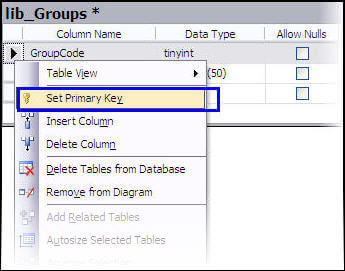
I try to create an index view, and unique clustered index on the view. My problem is that how to generate a primary key within a select clause. Create view ssrs.vMyView with schemabinding as select firstname, lastname, other columns -example columns from mytable how to generate a primary key for each row on the fly? Login to the SSH Key Management Utility; Click 'Generate a Key' (Or 'Upload a Key' if you have generated your own Key Pair) Click the button to Download the Private Key to your computer. The Private Key should be kept in a safe place, as anyone who has your private key can login as you. Click the button to Upload the Public Key to the Server.
- Device simulator writes JSON data to Cosmos DB into raw collection. Such data is exposed by Cosmos DB Change Feed and consumed by an Azure Function (via Change Feed Processor), that get the JSON document and uses it to create or updated the related materialized views, stored in the view collection. Change feed in Azure Cosmos DB.
- Can I set a primary key in a view in mysql? If so, your utility/program might have a way to 'auto-generate' unique IDs, for the data it is retrieving. Best regards, norbert.
- The key has been inferred and the definition was created as a read-only table/view. When you create a model, EF will automatically generate the classes required to query and manipulate the entities. However, this is not the case for an entity that is based on a view.
- I can create the key independantly from the data store. I know it is unique so I wouldn't bother to create data on my laptop totally disconnected and later insert to main db without any change in keys.-Not needing db store to learn the key also means I wouldn't need roundtrips to server. Those roundtrips might sum to a big amount.
- Oct 23, 2016 Let's go ahead and generate the database. Open Visual Studio. View - Server Explorer. Right click on Data Connections - Add Connection If you haven’t connected to a database from Server Explorer before you’ll need to select Microsoft SQL Server as the data source. Connect to your LocalDB instance, and enter Blogging as the database name.
| Key type | Resources |
|---|---|
| Master keys | Used for administrative resources: database accounts, databases, users, and permissions |
| Resource tokens | Used for application resources: containers, documents, attachments, stored procedures, triggers, and UDFs |
Generate Key In Db View Pdf
Master keys
Master keys provide access to all the administrative resources for the database account. Master keys:
- Provide access to accounts, databases, users, and permissions.
- Cannot be used to provide granular access to containers and documents.
- Are created during the creation of an account.
- Can be regenerated at any time.
Each account consists of two Master keys: a primary key and secondary key. The purpose of dual keys is so that you can regenerate, or roll keys, providing continuous access to your account and data.
In addition to the two master keys for the Cosmos DB account, there are two read-only keys. These read-only keys only allow read operations on the account. Read-only keys do not provide access to read permissions resources.
Primary, secondary, read only, and read-write master keys can be retrieved and regenerated using the Azure portal. For instructions, see View, copy, and regenerate access keys.
The process of rotating your master key is simple. Navigate to the Azure portal to retrieve your secondary key, then replace your primary key with your secondary key in your application, then rotate the primary key in the Azure portal.
Code sample to use a master key
The following code sample illustrates how to use a Cosmos DB account endpoint and master key to instantiate a DocumentClient and create a database.
Resource tokens
Resource tokens provide access to the application resources within a database. Resource tokens:
- Provide access to specific containers, partition keys, documents, attachments, stored procedures, triggers, and UDFs.
- Are created when a user is granted permissions to a specific resource.
- Are recreated when a permission resource is acted upon on by POST, GET, or PUT call.
- Use a hash resource token specifically constructed for the user, resource, and permission.
- Are time bound with a customizable validity period. The default valid time span is one hour. Token lifetime, however, may be explicitly specified, up to a maximum of five hours.
- Provide a safe alternative to giving out the master key.
- Enable clients to read, write, and delete resources in the Cosmos DB account according to the permissions they've been granted.
You can use a resource token (by creating Cosmos DB users and permissions) when you want to provide access to resources in your Cosmos DB account to a client that cannot be trusted with the master key.
Cosmos DB resource tokens provide a safe alternative that enables clients to read, write, and delete resources in your Cosmos DB account according to the permissions you've granted, and without need for either a master or read only key.
Here is a typical design pattern whereby resource tokens may be requested, generated, and delivered to clients:
A mid-tier service is set up to serve a mobile application to share user photos.
The mid-tier service possesses the master key of the Cosmos DB account.
The photo app is installed on end-user mobile devices.
On login, the photo app establishes the identity of the user with the mid-tier service. This mechanism of identity establishment is purely up to the application.
Once the identity is established, the mid-tier service requests permissions based on the identity.
The mid-tier service sends a resource token back to the phone app.
The phone app can continue to use the resource token to directly access Cosmos DB resources with the permissions defined by the resource token and for the interval allowed by the resource token.
When the resource token expires, subsequent requests receive a 401 unauthorized exception. At this point, the phone app re-establishes the identity and requests a new resource token.
Resource token generation and management is handled by the native Cosmos DB client libraries; however, if you use REST you must construct the request/authentication headers. For more information on creating authentication headers for REST, see Access Control on Cosmos DB Resources or the source code for our .NET SDK or Node.js SDK.
For an example of a middle tier service used to generate or broker resource tokens, see the ResourceTokenBroker app.
Users
Azure Cosmos DB users are associated with a Cosmos database. Each database can contain zero or more Cosmos DB users. The following code sample shows how to create a Cosmos DB user using the Azure Cosmos DB .NET SDK v3.
Titan quest cd key generator download. Sep 14, 2017 Titan Quest Anniversary Edition is causing massing power spikes and crashes the game/pc.fix your s.t #3. Call it CD Key, put your cd key number in this. Once I have put this in the game worked. I dont know if you ahve to do the hkey classes root, hkey current user and this, but it only worked once I did the local machine. When writing a keygen, the author will identify the algorithm used in creating a valid cd key. Once the algorithm is identified they can then incorporate this into the keygen. If you search a warez download site for 'titan quest cd key generator keygen', this often means your download includes a keygen. Feb 23, 2014 Titan Quest CD KEY WORKING / Titan Quest 100% RADI Banalni Svet. Unsubscribe from Banalni Svet? Cancel Unsubscribe. Subscribe Subscribed Unsubscribe 146. Titan Quest all versions serial number and keygen, Titan Quest serial number, Titan Quest keygen, Titan Quest crack, Titan Quest activation key, Titan Quest download keygen, Titan Quest show serial number, Titan Quest key, Titan Quest free download, Titan Quest 5518d461 find serial number.
Note
Each Cosmos DB user has a ReadAsync() method that can be used to retrieve the list of permissions associated with the user.
Permissions
A permission resource is associated with a user and assigned at the container as well as partition key level. Each user may contain zero or more permissions. A permission resource provides access to a security token that the user needs when trying to access a specific container or data in a specific partition key. There are two available access levels that may be provided by a permission resource:
- All: The user has full permission on the resource.
- Read: The user can only read the contents of the resource but cannot perform write, update, or delete operations on the resource.
Note
In order to run stored procedures the user must have the All permission on the container in which the stored procedure will be run.
Code sample to create permission
The following code sample shows how to create a permission resource, read the resource token of the permission resource, and associate the permissions with the user created above.
Code sample to read permission for user
The following code snippet shows how to retrieve the permission associated with the user created above and instantiate a new CosmosClient on behalf of the user, scoped to a single partition key.
Add users and assign roles
To add Azure Cosmos DB account reader access to your user account, have a subscription owner perform the following steps in the Azure portal.
- Open the Azure portal, and select your Azure Cosmos DB account.
- Click the Access control (IAM) tab, and then click + Add role assignment.
- In the Add role assignment pane, in the Role box, select Cosmos DB Account Reader Role.
- In the Assign access to box, select Azure AD user, group, or application.
- Select the user, group, or application in your directory to which you wish to grant access. You can search the directory by display name, email address, or object identifiers.The selected user, group, or application appears in the selected members list.
- Click Save.
The entity can now read Azure Cosmos DB resources.
Delete or export user data
Azure Cosmos DB enables you to search, select, modify and delete any personal data located in database or collections. Azure Cosmos DB provides APIs to find and delete personal data however, it’s your responsibility to use the APIs and define logic required to erase the personal data.Each multi-model API (SQL, MongoDB, Gremlin, Cassandra, Table) provides different language SDKs that contain methods to search and delete personal data. You can also enable the time to live (TTL) feature to delete data automatically after a specified period, without incurring any additional cost.
Note
For information about viewing or deleting personal data, see Azure Data Subject Requests for the GDPR. For more information about GDPR, see the GDPR section of the Service Trust portal.
Next steps
- To learn more about Cosmos database security, see Cosmos DB Database security.
- To learn how to construct Azure Cosmos DB authorization tokens, see Access Control on Azure Cosmos DB Resources.
- User management samples with users and permissions, .NET SDK v3 user management samples
Using MVC, Entity Framework, and ASP.NET Scaffolding, you can create a web application that provides an interface to an existing database. This tutorial series shows you how to automatically generate code that enables users to display, edit, create, and delete data that resides in a database table. The generated code corresponds to the columns in the database table.
This tutorial focuses on using ASP.NET Scaffolding to generate the controllers and views.
In this tutorial, you:
- Add scaffold
- Add links to new views
- Display student views
- Display enrollment views
Prerequisite
Add scaffold
You are ready to generate code that will provide standard data operations for the model classes. You add the code by adding a scaffold item. There are many options for the type of scaffolding you can add; in this tutorial, the scaffold will include a controller and views that correspond to the Student and Enrollment models you created in the previous section.
To maintain consistency in your project, you will add the new controller to the existing Controllers folder. Right-click the Controllers folder, and select Add > New Scaffolded Item.
Select the MVC 5 Controller with views, using Entity Framework option. This option will generate the controller and views for updating, deleting, creating and displaying the data in your model.
Select Student (ContosoSite.Models) for the model class and select the ContosoUniversityDataEntities (ContosoSite.Models) for the context class. Keep the controller name as StudentsController.
Click Add.
If you receive an error, it may be because you did not build the project in the previous section. If so, try building the project, and then add the scaffolded item again.
After the code generation process is complete, you will see a new controller and views in your project's Controllers and Views > Students folders.
Perform the same steps again, but add a scaffold for the Enrollment class. When finished, you have an EnrollmentsController.cs file, and a folder under Views named Enrollments with the Create, Delete, Details, Edit and Index views.
Add links to new views
To make it easier for you to navigate to your new views, you can add a couple of hyperlinks to the Index views for students and enrollments. Open the file at Views > Home > Index.cshtml, which is the home page for your site. Add the following code below the jumbotron.
For the ActionLink method, the first parameter is the text to display in the link. The second parameter is the action and the third parameter is the name of the controller. For example, the first link points to the Index action in StudentsController. The actual hyperlink is constructed from these values. The first link ultimately takes users to the Index.cshtml file within the Views/Students folder.
Display student views
You will verify that the code added to your project correctly displays a list of the students, and enables users to edit, create, or delete the student records in the database.
Right-click the Views > Home > Index.cshtml file, and select View in Browser. On the application home page, select List of students.
On the Index page, notice the list of the students and links to modify this data. Select the Create New link and provide some values for a new student. Click Create, and notice the new student is added to your list.
Back on the Index page, select the Edit link, and change some of the values for a student. Click Save, and notice the student record has been changed.
Finally, select the Delete link and confirm that you want to delete the record by clicking the Delete button.
Without writing any code, you have added views that perform common operations on the data in the Student table.
You may have noticed that the text label for a field is based on the database property (such as LastName) which is not necessarily what you want to display on the web page. For example, you may prefer the label to be Last Name. You will fix this display issue later in the tutorial.
Display enrollment views
Your database includes a one-to-many relationship between the Student and Enrollment tables, and a one-to-many relationship between the Course and Enrollment tables. The views for Enrollment correctly handle these relationships. Navigate to the home page for your site and select the List of enrollments link and then the Create New link.
The view displays a form for creating a new enrollment record. In particular, notice that the form contains a CourseID drop-down list and a StudentID drop-down list. Both are populated with values from the related tables.
Furthermore, validation of the provided values is automatically applied based on the data type of the field. Grade requires a number, so an error message is displayed if you try to provide an incompatible value: The field Grade must be a number.
You have verified that the automatically-generated views enable users to work with the data in the database. In the next tutorial in this series, you will update the database and make the corresponding changes in the web application.
Next steps
Generate Key In Db View 2017
In this tutorial, you:
- Added scaffold
- Added links to new views
- Displayed student views
- Displayed enrollment views
How To View Db Files
Advance to the next tutorial to learn how to change the database.