- How To Generate Ssh Key Pair
- Generate Ssh Public Key From Private Key
- Ssh Keygen Generate Public Key From Private
Mar 31, 2018 It is a simple one liner command to generate a public key from a private key, so lets say our private key is named ‘user@myserver.key’ and we want to generate the public key and name it ‘authorizedkeys’. Below is the command to do this. User@workstation:$ ssh-keygen -y -f user@myserver.key authorizedkeys 1. Jun 26, 2019 From the My Profile page, select the SSH Keys tab, and then click Add a SSH Key: Create a label for your key, then paste in the contents of your public SSH key (idrsa.pub): Click Add Key. When you next create a Linode you’ll be given the opportunity to include your SSH key in the Linode’s creation.
Halo 4's worldwide release date has been confirmed for November 6, 2012. It is being developed by 343 Industries. Halo 4 has been confirmed for Xbox 360, but has not been announced for PC or the upcoming Xbox successor. Halo 4 beta release date. Halo 4 marks the start of a new trilogy that begins with its release in 2012.Halo 4 was announced on June 6, 2011 at Microsoft's E3 press conference.
How To Generate Ssh Key Pair

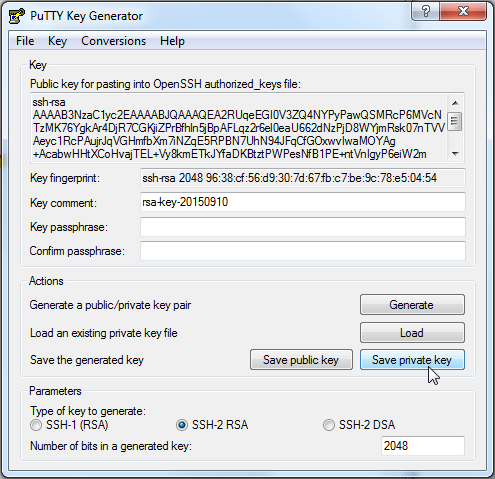
The PuTTYgen program is part of PuTTY, an open source networking client for the Windows platform.
Generate Ssh Public Key From Private Key
To generate an SSH key pair on Windows using the PuTTYgen program:
Ssh Keygen Generate Public Key From Private
- Download and install PuTTY or PuTTYgen.
To download PuTTY or PuTTYgen, go to http://www.putty.org/ and click the You can download PuTTY here link.
- Run the PuTTYgen program.
- Set the Type of key to generate option to SSH-2 RSA.
- In the Number of bits in a generated key box, enter 2048.
- Click Generate to generate a public/private key pair.
As the key is being generated, move the mouse around the blank area as directed.
- (Optional) Enter a passphrase for the private key in the Key passphrase box and reenter it in the Confirm passphrase box.
Note:
While a passphrase is not required, you should specify one as a security measure to protect the private key from unauthorized use. When you specify a passphrase, a user must enter the passphrase every time the private key is used.
- Click Save private key to save the private key to a file. To adhere to file-naming conventions, you should give the private key file an extension of
.ppk(PuTTY private key).Note:
The.ppkfile extension indicates that the private key is in PuTTY's proprietary format. You must use a key of this format when using PuTTY as your SSH client. It cannot be used with other SSH client tools. Refer to the PuTTY documentation to convert a private key in this format to a different format. - Select all of the characters in the Public key for pasting into OpenSSH authorized_keys file box.
Make sure you select all the characters, not just the ones you can see in the narrow window. If a scroll bar is next to the characters, you aren't seeing all the characters.
- Right-click somewhere in the selected text and select Copy from the menu.
- Open a text editor and paste the characters, just as you copied them. Start at the first character in the text editor, and do not insert any line breaks.
- Save the text file in the same folder where you saved the private key, using the
.pubextension to indicate that the file contains a public key. - If you or others are going to use an SSH client that requires the OpenSSH format for private keys (such as the
sshutility on Linux), export the private key:- On the Conversions menu, choose Export OpenSSH key.
- Save the private key in OpenSSH format in the same folder where you saved the private key in
.ppkformat, using an extension such as.opensshto indicate the file's content.