- Private Key To Public Key Bitcoin
- Python Generate Public Key From Private Key Bitcoin With Balance
- Generate Bitcoin Address From Private Key Python
- Generate Public Key From Private Key Bitcoin
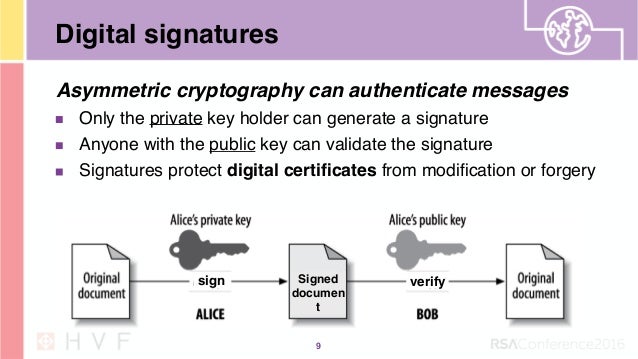
Asymmetric keys are represented by Python objects. Each object can be either a private key or a public key (the method hasprivate can be used to distinguish them). A key object can be created in four ways: generate at the module level (e.g. Feb 19, 2020 Bitcoin-Keys-Generator. Python module that generates private key, public key and wallet address from number. Python generators 123. Without any argument, script is converting number 1 by default. Jul 16, 2018 We’ll use this private key throughout the article to derive both a public key and the address for the Bitcoin wallet. What we want to do is to apply a series of conversions to the private key to get a public key and then a wallet address. Most of these conversions are called hash functions.
Private Key To Public Key Bitcoin
You see, to create a public key from a private one, Bitcoin uses the ECDSA, or Elliptic Curve Digital Signature Algorithm. More specifically, it uses one particular curve called secp256k1. Now, this curve has an order of 256 bits, takes 256 bits as input, and outputs 256-bit integers. Jun 14, 2019 In fact, you don’t even need the private key in order to generate addresses. From your private key, you can generate an eXtended Public (xpub) key. Then we use the xpub key to generate.
There is more to a bitcoin wallet than just the address itself. It also contains the public and private key for each of your bitcoin addresses. Your bitcoin private key is a randomly generated string (numbers and letters), allowing bitcoins to be spent. A private key is always mathematically related to the bitcoin wallet address, but is impossible to reverse engineer thanks to a strong encryption code base.
If you don’t back up your private key and you lose it, you can no longer access your bitcoin wallet to spend funds.
As mentioned, there is also a public key. This causes some confusion, as some people assume that a bitcoin wallet address and the public key are the same. That is not the case, but they are mathematically related. A bitcoin wallet address is a hashed version of your public key.
Every public key is 256 bits long — sorry, this is mathematical stuff — and the final hash (your wallet address) is 160 bits long. The public key is used to ensure you are the owner of an address that can receive funds. The public key is also mathematically derived from your private key, but using reverse mathematics to derive the private key would take the world’s most powerful supercomputer many trillion years to crack.
Besides these key pairs and a bitcoin wallet address, your bitcoin wallet also stores a separate log of all of your incoming and outgoing transactions. Every transaction linked to your address will be stored by the bitcoin wallet to give users an overview of their spending and receiving habits.
Last but not least, a bitcoin wallet also stores your user preferences. However, these preferences depend on which wallet type you’re using and on which platform. The Bitcoin Core client, for example, has very few preferences to tinker around with, making it less confusing for novice users to get the hang of it.
Your bitcoin wallet generates a “master” file where all of the preceding details are saved. For computer users, that file is called wallet.dat. It’s saved on a Windows machine, for example, in the C:UserYournameDocumentsAppDataRoamingBitcoinfolder. Make sure to create one or multiple backups of this wallet.dat file on other storage devices, such as a USB stick or memory card. The bitcoin wallet software will let you import a wallet.dat file in case your previous file is damaged or lost, restoring your previous settings, including any funds associated with your bitcoin wallet address.
Check out more information on importing private keys and wallet.dat files.
Latest versionReleased:
Bitcoin and Other cryptocurrency Library
Project description
Python Bitcoin Library
Bitcoin, Litecoin and Dash Crypto Currency Library for Python.
Includes a fully functional wallet, with multi signature, multi currency and multiple accounts.You this library at a high level and create and manage wallets for the command line or at a low leveland create your own custom made transactions, keys or wallets.
The BitcoinLib connects to various service providers automatically to update wallets, transactions andblockchain information. It does currently not parse the blockchain itself.
Documentation
Read the full documentation at: http://bitcoinlib.readthedocs.io/
Disclaimer
This library is still in development, please use at your own risk and test sufficiently before using it in aproduction environment.
Some Examples
Wallet
The bitcoin library contains a wallet implementation using SQLAlchemy and SQLite3 to import, create and managekeys in a Hierarchical Deterministic way.
Example: Create wallet and generate new address (key) to receive bitcoins
Now send a small transaction to your wallet and use the scan() method to update transactions and UTXO’s
When your wallet received a payment and has unspent transaction outputs, you can send bitcoins easily.If successful a transaction ID is returned
Wallet from passphrase with accounts and multiple currencies
The following code creates a wallet with two bitcoin and one litecoin account from a Mnemonic passphrase.The complete wallet can be recovered from the passphrase which is the masterkey.
Multi Signature Wallets
Create a Multisig wallet with 2 cosigner which both need to sign a transaction.
Create a transaction in the first wallet
And then import the transaction in the second wallet, sign it and push it to the network
Segregated Witness Wallet
Easily create and manage segwit wallets. Both native segwit with base32/bech32 addresses and P2SH nested segwitwallets with traditional addresses are available.
Create a native single key P2WPKH wallet:
Or create a P2SH nested single key P2SH_P2WPKH wallet:
Command Line Tool
With the command line tool you can create and manage wallet without any Python programming.
To create a new Bitcoin wallet
You can use clw to create simple or multisig wallets for various networks, manage public and private keysand managing transactions.
For the full command line wallet documentation please read
Mnemonic key generation
Allows you to use easy to remember passphrases consisting of a number of words to store private keys (BIP0039).You can password protect this passphrase (BIP0038), and use the HD Wallet structure to generate a almost infinitenumber of new private keys and bitcoin addresses (BIP0043 and BIP0044).
Example: Generate a list of words passphrase and derive a private key seed
Service providers
Communicates with pools of bitcoin service providers to retreive transaction, address, blockchain information.Can be used to push a transaction to the network, determine optimal service fee for a transaction or to update yourwallet’s balance.
When working with wallets connections to service providers are automatically managed so you don’t have to worryabout them. You can however easily use the Service object directly.
Example: Get estimated transaction fee in sathosis per Kb for confirmation within 5 blocks
Other Databases
Bitcoinlib uses the SQLite database by default but other databases are supported as well.See http://bitcoinlib.readthedocs.io/en/latest/_static/manuals.databases.html for instructions on how to useMySQL or PostgreSQL.
More examples
For more examples see https://github.com/1200wd/bitcoinlib/tree/master/examples
Implements the following Bitcoin Improvement Proposals
- Hierarchical Deterministic Wallets (BIP0032)
- Passphrase-protected private key (BIP0038)
- Mnemonic code for generating deterministic keys (BIP0039)
- Purpose Field for Deterministic Wallets (BIP0043)
- Multi-Account Hierarchy for Deterministic Wallets (BIP0044)
- Structure for Deterministic P2SH Multisignature Wallets (BIP0045)
- Bech32/base32 address format for native v0-16 witness outputs (BIP0173)
- Native and P2SH nested Segregated Witness transactions (BIP0141 and BIP0143)
Installing and updating
Pre-requirements Linux
sudo apt install build-essentialpython-devpython3-devlibgmp3-dev
To install OpenSSL development package on Debian, Ubuntu or their derivatives
sudo apt install libssl-dev
To install OpenSSL development package on Fedora, CentOS or RHEL
sudo yum install gcc openssl-devel
This subkey is a separate key that, for all intents and purposes, is signed by your primary key and transmitted at the same time. Gpg generate key over ssh. The suggested usage of GPG is to create a subkey for encryption.
Pre-requirements Windows
This library requires a Microsoft Visual C++ Compiler. Seehttp://bitcoinlib.readthedocs.io/en/latest/_static/manuals.install.html
The fastecdsa library is not enabled at this moment on windows, the slower ecdsa library is installed.
Install with pip
pip install bitcoinlib
These packages will be installed* fastecdsa (or ecdsa on Windows)* pyaes* scrypt* sqlalchemy* requests* enum34 (for older Python installations)* pathlib2 (for Python 2)* six
Install development environment
Required packages:
sudo apt install -y postgresql postgresql-contribmysql-serverlibpq-devlibmysqlclient-dev
Create a virtual environment for instance on linux with virtualenv:
Then clone the repository and install dependencies:
Troubleshooting
When you experience issues with the scrypt package when installing you can try to solve this by removing and reinstallscrypt:
Please make sure you also have the Python development and SSL development packages installed, see ‘Other requirements’above.
You can also use pyscrypt instead of scrypt. Pyscrypt is a pure Python scrypt password-based key derivation library.It works but it is slow when using BIP38 password protected keys.
If you run into issues to not hesitate to contact us or file an issue at https://github.com/1200wd/bitcoinlib/issues
Update library
Update to the latest version of the library with
To upgrade make sure everything is backuped and run updatedb.py from the installation directory.
For more information on installing, updating and maintenance seehttps://bitcoinlib.readthedocs.io/en/latest/_static/manuals.install.html#installation
Future / Roadmap
- Create Script class and support advanced scripts
- Fully support timelocks
- Support for Trezor wallet
- Improve speed and security
- Integrate in ERP and shopping solutions such as Odoo, Magento, Shopware
- Support for lightning network
Release historyRelease notifications
0.4.14
0.4.13
0.4.12
0.4.11
0.4.10
0.4.9
0.4.8
0.4.7
0.4.6
0.4.5
0.4.4
0.4.3
0.4.2
0.4.1
0.4.0
0.3.37
0.3.36
0.3.36a0 pre-release
0.3.35.post1
0.3.34
0.3.34a2 pre-release
Apr 04, 2020 Recover My Files 6.3.2.2553 Crack is the best and remarkable software use for data reinforcement and recuperation. Besides, in your everyday life, there are numerous circumstances that happen for losing your most important, personal and most critical and confidential data. Recover my files license key generator download. Feb 15, 2020 Recover My Files 6.3.2 Crack INCL Keygen Full Version. Especially, Recover My Files Keygen Full Download 2020 facilitates by giving a deep scan and gives a detailed analysis for recuperation for the lost data. It gives you the option with the detail list of the recoverable files that you want to get back.
0.3.34a1 pre-release
0.3.33a4 pre-release
0.3.33a3 pre-release
0.3.33a2 pre-release
0.3.33a1 pre-release
0.3.33a0 pre-release
Download files
Python Generate Public Key From Private Key Bitcoin With Balance
Download the file for your platform. If you're not sure which to choose, learn more about installing packages.
| Filename, size | File type | Python version | Upload date | Hashes |
|---|---|---|---|---|
| Filename, size bitcoinlib-0.4.14.tar.gz (418.1 kB) | File type Source | Python version None | Upload date | Hashes |
Generate Bitcoin Address From Private Key Python
Hashes for bitcoinlib-0.4.14.tar.gz
Generate Public Key From Private Key Bitcoin
| Algorithm | Hash digest |
|---|---|
| SHA256 | 2bd336c7436b8d1875abcfce0a700e27b06f48c9b50b622adc8f97d7c65a5614 |
| MD5 | 9744035220173e6504ddd75a3de50a77 |
| BLAKE2-256 | d55d82ee2839784b79a8bbb9448298885ac36d2c865eae135ebd78ae70ca228f |