- Generate Random Key In Oracle Software
- Generate Random Key In Oracle Login
- Generate Random Key In Oracle Account
- Oracle Generate Random Number
- Oracle 10g introduced a number of functions that should be used in place of the RANDOM function. In Oracle 11gR1, the RANDOM function was deprecated in favour of these other functions. Generating Random Dates. There are no specific functions for generating random dates, but we can add random numbers to an existing date to make it random.
- Jun 21, 2004 Hi, I am constructing the key as follows: KeyGenerator keyGenerator = KeyGenerator.getInstance('Blowfish'); keyGenerator.init(128); Key key = keyGenerator.generateKey; Now, I want to generate a new random key. Can you guys tell me how can I do that. Thanks in advance.
Universal Unique Identifier (UUID) Oracle sequences are frequently used to provide unique numbers for primary keys where an appropriate unique key is not available. The use of sequences can cause a problem during data migrations and replication processes where duplication of the sequences occur. A random date in what range? Is any valid date value acceptable so that a large fraction of the dates you generate will be B.C. And a relatively small fraction will be in the 20th or 21st century? Do you want the time component to be random as well or do you want the dates to be at midnight as in your example? – Justin Cave Jul 3 '13 at 14:07. Jul 01, 2010 We need to generate a sequence of numbers using a sql statement. This will generate a number sequence. Nothing fancy, simplest of sql known:) Here it is: SELECT ROWNUM FROM DUAL CONNECT BY LEVEL generate the random data, the oracle build in package “dbmsrandom” comes handy. The Rdb Technical Corner is a regular feature of the Oracle Rdb Web Journal. The examples in this article use SQL language from Oracle Rdb V7.1 and later versions. Guide to Using SQL: Sequence Number Generator There have been many requests for Oracle Rdb to generate unique numbers for use as PRIMARY KEY values.
RandPassGenerator 1.3The RandPassGenerator Java application is a simple command-line utility for generating random passwords, passphrases, and raw keys. It is designed very conservatively to ensure that the random values it provides offer full cryptographic strength requested by the user.
Usage Information
To use RandPassGenerator, you'll need the Oracle Java Runtime Environment; any recent version should be sufficient, but at a minimum version 9 is recommended.
The RandPassGenerator can also run from a terminal or console. The command-line syntax is simple:
Options

-v {Print verbose messages during operation, in addition to logging}
-str S {Use generation strength of S bits (default: 160)}
-pw N {Generate N random password of the specified strength}
-pp N {Generate N random passphrases of the specified strength}
Generate Random Key In Oracle Software
-k N {Generate N random keys of the specified strength}
-enc {Encrypt generated random key using a random password that is at least a 16 characters (256-bit AES) and write to file named the Key ID (KEY_ID.enc). A prompt for a random password to us will appear. Users should generate a random password to use for encryption prior to generating keys. ('java -jar RandPassGenerator.jar -pw 1 -str 96' will generate a 16 character password).}
-decrypt {Decrypt encrypted key file using a random password that is at least a 16 characters and save as text file (KEY_ID_decrypted.txt). A prompt for the name of the encrypted file to decrypt will appear, then a prompt for the random password to use will appear.}
Unusual options:
-pplen M {When generating passphrases, longest word should be M letters long (minimum value of M is 3)}
-ppurl U {Use the URL U to load words for passphrase (default: use internal list)}
-pwcs P {Use character pattern P for characters to use in passwords (lowercase, uppercase, number, special character, or combination)}
-log F {Log all operations to the log file F (default: ./randpass.log)}
-out F {Write output to file F (default: writes to stdout)}
-c N {Format output passwords and keys in chunks of N characters}
-sep S {For chunk formatting, use S as the separator (default: -)}
At least one of the options -pw, -pp, or -k must be supplied. The keys, passwords, or passphrases produced by RandPassGenerator will be written to the standard output (stdout), so they can easily be redirected to a file. The -out option can also be used to write the output to a file. All messages are written to the standard error (stderr).
Detailed log messages are appended to the specified log file - if the log file cannot be opened, then the tool will not run.
The agent then just sits in memory with your key unlocked and loaded, ready to use every time you ssh somewhere. Once you log in, the idea is to run ssh-add once and only once, in order to give the agent your passphrase, to decode your key. So to run your ssh-agent use the following command. Ssh key pair github. All ssh-family commands 1 will then consult the agent and automatically be able to use your private key.”. I will give a gist of it below:“You want to be running ssh-agent in the background as you log in.
Note that the -pwcs option is a little strange. Each character in the value represents a full set of characters. Any lowercase lettermeans 'add a character set of all lowercase letters', any uppercase letter means 'add a set of all uppercase letter', any digit means'add a set of all digits', and anything else means 'add a set of all punctuation marks'. There is no way to supply a fully custom character set. Normally, you should not use the -pwcs option, you should let RandPassGenerator use its default character set.
Examples
Example 1: generate 5 random passwords using the default mixed character set, at default strength of 160, saved into file GoodPasswords.dat
Example 2: generate 20 random passphrases using the default dictionary, at strength of 256, with verbose messages, using words up to 9 letters long, and output saved into the file passphrases.txt
Example 3: generate 200 random keys at strength of 192, with logging to keygen.log, and output to mykeys.out.
Example 4: generate 100 passwords at strength 160, using a character set of lowercase letters and digits, with output redirected to hi-quality-stuff.txt
Example 5: generate 10 passwords at strength 128, formatted into chunks of five characters each, separated by /.
Example 6: generate 1 random key at strength 256, and encrypt to file using random password.
Example 7: Decrypt encrypted key file.
Design Information
The foundation of RandPassGenerator is an implementation of the NIST SP800-90 Hash DRBG. It uses entropy, carefully gathered from system sources, to generate quality random output. The internal strength of the DRBG is 192 bits, according to NIST SP800-57, using the SHA-384 algorithm. In accordance with SP800-90, the DRBG is seeded with at least 888 bits of high quality entropy from entropy sources prior to any operation.
This implementation uses the seed mechanism of the Java SecureRandom class for gathering entropy. This implementation performs self-tests at every execution, so that users can be confident that no library problems have affected operation. Two kinds of self-tests are performed:
- Known-answer tests from the NIST Hash_DRBG verification suite test file.
- Simple statistical tests on DRBG output.
If the tests don't pass, the tool reports failure and refuses to run.
The strength mechanism implemented here is quite simple. For passwords, the size of the character set used defines thebits-per-character, and password length is then computed to meet or exceed the requested strength (typically, this is somewhere around 5-6 bits per character). Similarly, for passphrases the size of the usable dictionary defines the bits-per-word, and passphrase length is then computed to meet or exceed the requested strength (for the default dictionary and settings, roughly 16 bits-per-word). Duplicates are eliminated and the entropy is computed based on the number of unique characters or words.
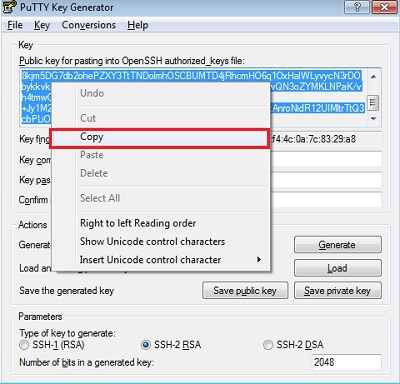
The RandPassGenerator tool performs extensive logging. By default, log entries are appended to the local file 'randpass.log'. No actual key data, random data, or seed data is written to the log file.
License
See LICENSE.
Generate Random Key In Oracle Login
Contributing
See CONTRIBUTING.
Generate Random Key In Oracle Account
Disclaimer
Oracle Generate Random Number
See DISCLAIMER.